Bellawatt

Solutions: Grid Participation

Manage the grid together.

For a century, the relationship ran one way: the utility generated and the customer consumed. The next century looks more like a partnership. Customers shift load, utilities defer infrastructure spend, and costs go down for everyone. If customers can’t or won’t shift, utilities build for the peak, and everyone pays for it.

Prices to devices

Set the rules. See what the week earned.

Connecting to the car is the easy part now: a sign-in with the automaker, no app to download, and the car reports from that night. A program wins or loses on what the customer lives with after that. So the rules are theirs, in their own terms: a price they’ll charge at, the hours the car is on the charger, and how far they drive. And every dollar the week earned traces back to the hours behind it. This is that experience for managed EV charging, with a fraction of the program behind it. Change anything on the left.

Managed charging

Tesla Model Y · cap 8¢

Vehicle and Charging Rules

Make
Model

Your Tesla connects through Tesla’s own account: a sign-in in a few screens, no app to download, and the car reports from tonight.

On the charger6 p.m.7 a.m.
4 p.m.9 a.m.
13 hours on the charger. A guarantee: if too few of them are under your cap, the car tops up at the cheapest of the rest to be ready on time.

Tonight the car charges 2 hours between 9 p.m. and 11 p.m.: 10.2 kWh at an average of 7.7¢, for $0.79. That is $1.00 less than the same charge on the flat rate.

Tomorrow’s day-ahead prices and the hours the car will take. Move the cap and watch the columns change sides; hover an hour for what makes up its price.

16¢24¢32¢
Noon
6 pm
12 am
6 am
6 p.m. 7 a.m. on the charger
  • Charging, at or under your cap
  • Not charging

Saved this week against the flat rate

$7.56

The car charged 73.7 kWh over seven nights for $5.33. On the flat rate that would have been $12.89. At this pace that is about $393 a year.

Each night on the rules above. The filled part of a column is what the dynamic rate charged; the outlined part stayed in the account. Hover a night for the hours behind it.

$0.00$0.75$1.50$2.25$3.00

Mon

Tue

Wed

Thu

Fri

Sat

Sun

  • Paid on the dynamic rate
  • Saved against the flat rate

Illustrative program: one day-ahead price shape, the wholesale price ISO New England clears for each hour plus the utility’s adder, measured against a 17.5¢ flat rate; a 7.7 kW home charger; and a week of driving and weather scaled from that one day. In production the car connects through the automaker’s own account with no app to download and no password stored, the prices are the ones your utility publishes each afternoon, and every credit settles from the telematics with the hours behind it on record.

The flexibility exists. The participation doesn't.

Electrification and data centers are driving load growth your infrastructure plan didn't anticipate. The flexibility to absorb it is sitting in your customers' garages, water heaters, and thermostats, and reaching it is no longer the hard part. Telematics has become a commodity; any vendor can read the car.

When DR and VPP programs underperform, the customer experience is usually the reason: enrollment is confusing, the value is hard to see, and customers drop out after the first event. Every business case assumes a participation rate. The levers that move it are conversion and capability: joining in minutes, device coverage broad enough that eligibility rarely disappoints, and a payout that arrives on time and explains itself. That layer is what we build.
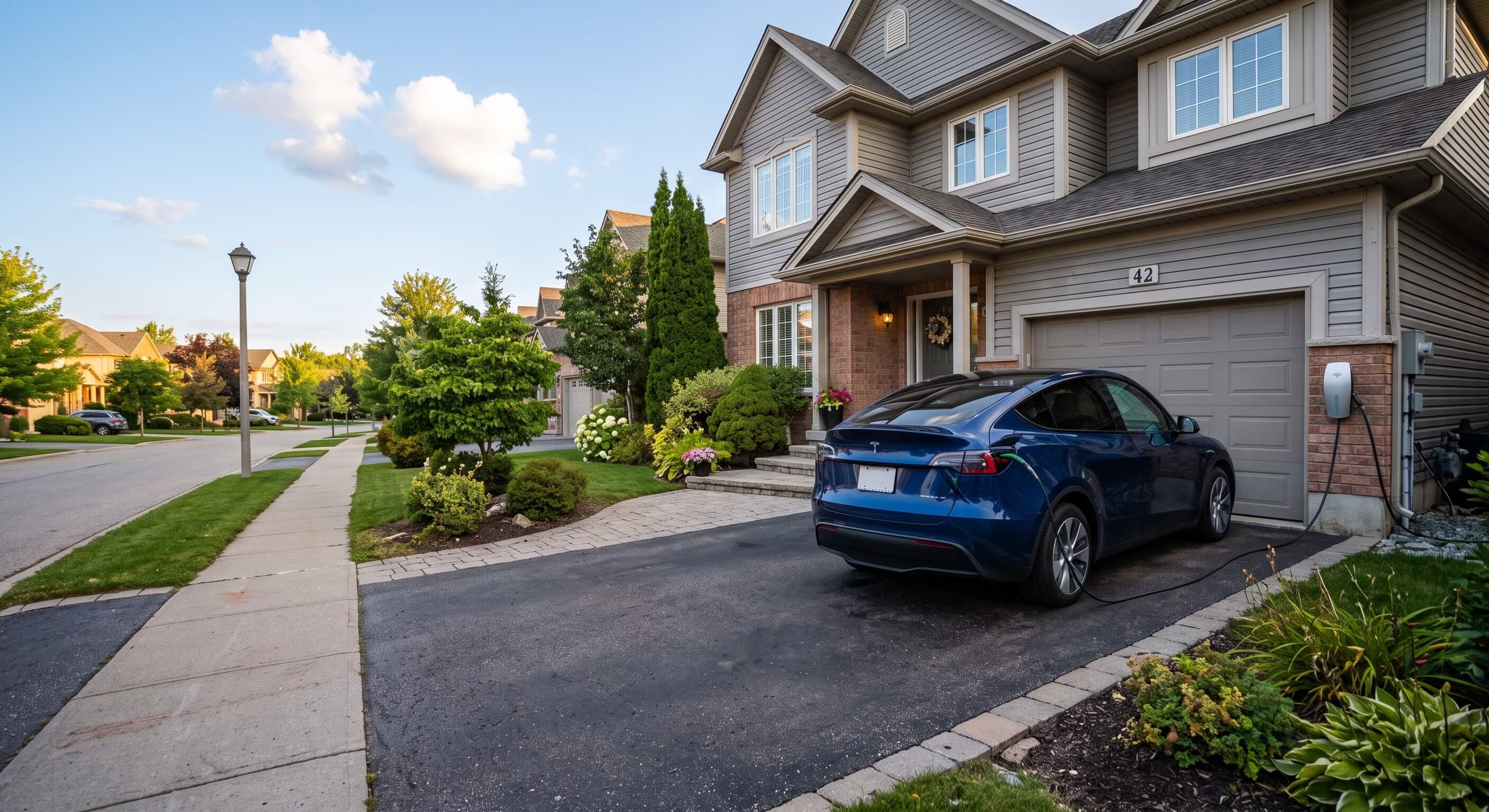
An electric car charging on the driveway of a suburban home.

Solutions to customer engagement